


As Gaza enters its third year of devastation following Israel’s military campaign launched after the October 7 attacks, the United Nations has taken an unprecedented step that is likely to intensify international scrutiny of Israeli conduct during the conflict.
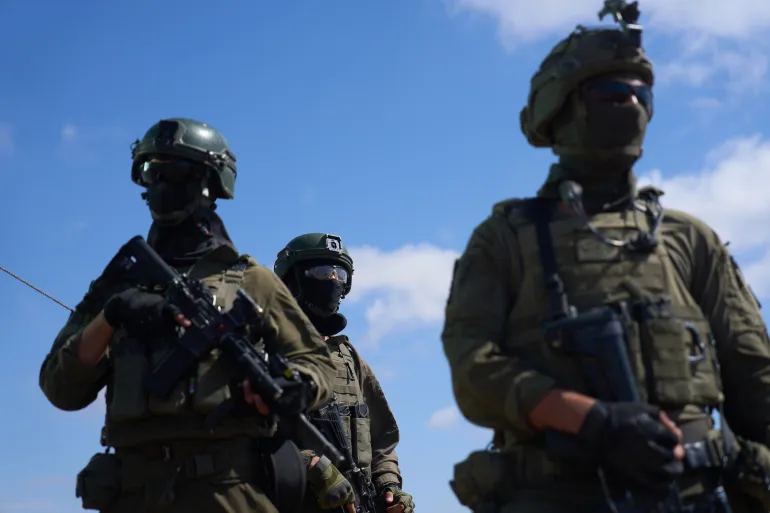
In its latest report on conflict-related sexual violence, dated 21 April 2026 and made public on 29 May 2026, the United Nations formally added Israeli armed and security forces to its annual blacklist of parties credibly suspected of patterns of rape and other forms of sexual violence in armed conflict. It is the first time Israeli state forces have been included since the UN monitoring mechanism was established more than fifteen years ago.
The decision places Israeli forces on a list that already includes Hamas, ISIS, armed groups in Africa and Asia, and other parties accused of systematic sexual violence during conflicts.
The report was issued by UN Secretary-General António Guterres as part of the organisation’s annual review of conflict-related sexual violence worldwide. According to the report, investigators verified multiple incidents involving Palestinian detainees from Gaza and the occupied West Bank between 2023 and 2025.
“The United Nations verified multiple incidents of conflict-related sexual violence, including as a form of torture,” the report states.
The UN documented abuse against fourteen men, seven women, nine boys and one girl from Gaza and the West Bank.
According to the report, violations included rape, gang rape, attempted rape, sexual torture, attacks on genitals, forced nudity, invasive searches and threats of rape.
The report states:
“Violations consisted of rape, including with objects, gang rape, attempted rape, physical violence to the genitals, instances of targeted shooting of the genitals, touching of breasts and genitals, strip and cavity searches conducted without apparent security justification, forced nudity and threats of rape.”
Investigators further recorded that:
“Rape and gang rape, in some cases repeated, were perpetrated against nine victims, the majority from Gaza.”
Gaza Detainees at the Centre of Allegations
Much of the evidence examined by UN investigators concerns Palestinians detained during military operations in Gaza and the occupied West Bank.
The report describes allegations of sexual abuse occurring during arrest, interrogation and detention, particularly within facilities run by Israeli military and security authorities.
Among the most frequently cited facilities is the Sde Teiman military detention centre in southern Israel, which has been the subject of extensive international reporting and investigations by human rights organisations.
The UN report notes that investigators were unable to gain direct access to many detention facilities and that restrictions imposed by Israeli authorities significantly limited the scope of investigations.
The report states that the documented cases should be viewed as “indicative of incidents and patterns” rather than a comprehensive accounting of all abuses because of access restrictions imposed on investigators.
The UN further reported that Palestinian detainees faced pressure not to report abuse.
According to the report, “explicit threats” were made by Israeli armed and security forces to discourage detainees from reporting mistreatment after their release.
A Year of Warnings
The blacklisting did not come without warning.
In August 2025, Guterres formally placed Israel “on notice” that it could be added to the list of parties credibly suspected of patterns of sexual violence in armed conflict.
At the time, the Secretary-General cited what he described as credible information concerning sexual violence committed against Palestinian detainees and warned that continued concerns could lead to Israel’s inclusion in the annex of future reports.
That warning triggered immediate objections from Israeli officials, who rejected the allegations as politically motivated.
Nine months later, the UN concluded that sufficient evidence existed to formally list Israeli armed and security forces in the 2026 report.
A Global Report Showing Alarming Trends
The Israel findings appear within a broader report documenting a dramatic increase in conflict-related sexual violence worldwide.
The UN recorded 9,788 verified cases across twenty-one conflict situations during 2025, more than double the previous year’s figure.
The report describes sexual violence as increasingly being used as a tool of intimidation, torture, displacement and social control during armed conflicts.
Pramila Patten, the UN Special Representative on Sexual Violence in Conflict, described the verified cases as only “the very tip of the iceberg” because many incidents remain unreported due to fear, stigma and restricted access to victims.
The 35-page report lists seventy-seven state and non-state actors from conflicts around the world.
Israeli armed and security forces were among the most significant new additions.
Israel Rejects the Findings
Israel responded with fury.
Israeli Ambassador to the United Nations Danny Danon denounced the decision as political and accused the UN of creating what he called a false equivalence between Israel and Hamas.
Israeli officials argued that the country had submitted documentation contesting the allegations and accused the UN of ignoring Israeli evidence.
The Israeli Foreign Ministry described the report as “shameful and absurd” and announced that Israel would suspend cooperation with the office of the Secretary-General.
The ministry argued that the report represented an attempt to create “fake symmetry” between Israel and Hamas and accused Guterres of bias.
Danon stated that placing Israel on the same list as Hamas represented a “new low” for the United Nations.
The United States also criticised the decision, arguing that Israel possessed a functioning legal system capable of investigating allegations against its own personnel.
UN Pushes Back
UN officials have rejected claims that the findings were politically motivated.
Patten stated publicly after publication that Israel had not provided meaningful evidence demonstrating accountability measures or preventive actions.
“I never received an iota of information on measures taken by the government of Israel on implementation of the preventive measures,” she said following publication of the report.
According to Patten, Israel supplied information about laws and procedures but failed to provide evidence of concrete accountability measures addressing the allegations documented by investigators.
UN officials have also pointed to the restrictions placed on investigators, including denial of access to detention facilities and limitations on travel to Gaza.
Those restrictions, they argue, made verification more difficult rather than less necessary.
Broader Pattern of Allegations
The UN report emerges against a backdrop of growing documentation of alleged abuse of Palestinian detainees.
Over the past two years, numerous human rights organisations, UN experts, former detainees and Israeli whistleblowers have described patterns of mistreatment in detention facilities holding Palestinians captured during military operations.
Separate humanitarian reports published in 2026 documented allegations of sexualised violence, forced nudity, humiliation and assault by Israeli soldiers and settlers in the occupied West Bank.
Researchers involved in those studies warned that the number of documented incidents likely represented only a small fraction of the true total because victims often feared retaliation or social stigma.
The UN report similarly emphasises that the verified cases should not be interpreted as an exhaustive account of abuse.
Instead, investigators concluded that the incidents they were able to verify demonstrated a sufficient pattern to warrant inclusion of Israeli armed and security forces on the blacklist.
A Significant Diplomatic Milestone
Although inclusion on the UN blacklist does not automatically trigger sanctions, it represents one of the most serious forms of public censure available within the UN’s conflict-related sexual violence monitoring framework.
States and armed groups that remain on the list face continuing scrutiny, monitoring requirements and potential restrictions affecting participation in UN peacekeeping operations.
For supporters of the decision, the listing reflects mounting evidence that serious abuses against Palestinian detainees have become systemic and require international accountability.
For Israel and its allies, it represents what they view as another example of disproportionate scrutiny directed at the country by international institutions.
What is beyond dispute is that the publication of the 2026 report marks a historic moment.
For the first time since the United Nations began systematically tracking conflict-related sexual violence, Israeli armed and security forces have been formally listed among parties credibly suspected of patterns of rape and sexual violence in armed conflict.
At a time when Gaza remains at the centre of global attention, the decision ensures that allegations concerning the treatment of Palestinian detainees will remain a major issue in the growing international debate over accountability for actions committed during the war.