


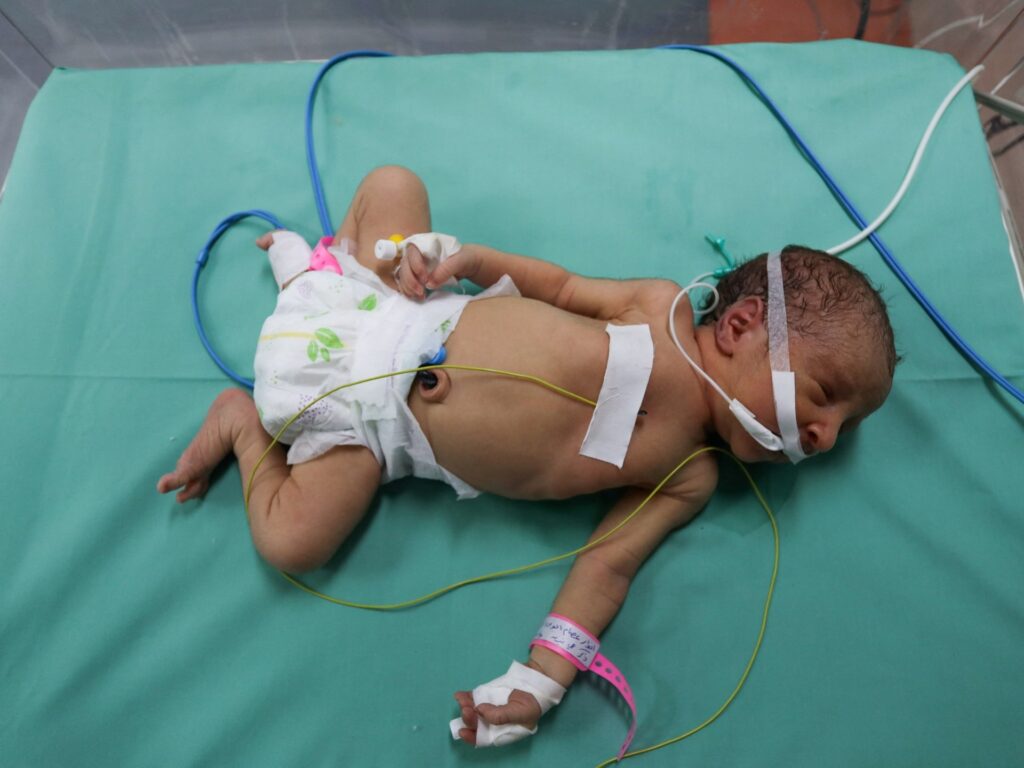
The number of babies dying on the day they are born in the Gaza Strip has risen by 75 percent compared with pre-war levels, according to new figures released by UNICEF, underscoring what the agency describes as a wave of “painful, preventable deaths” driven by maternal malnutrition, stress, and the near-collapse of prenatal and neonatal care.
UNICEF’s data, covering the final three months of the war, shows a sharp increase in first-day neonatal deaths — a critical indicator closely linked to the health of mothers during pregnancy and the availability of basic medical care at birth. The rise comes alongside a parallel surge in the number of babies born underweight, a condition that dramatically increases the risk of death in the first days and weeks of life.
“No child should be scarred by war before they have taken their first breath,” UNICEF said in a statement accompanying the figures, warning that Gaza’s newest generation is entering life already compromised by hunger and deprivation.
A Domino Effect: Hunger, Pregnancy, Death
Health experts say the trend reflects a cascading crisis. As food supplies dwindled and humanitarian access remained restricted, pregnant and breastfeeding women became increasingly malnourished, with direct consequences for their unborn children.
Before the war, roughly 5 percent of babies in Gaza were born underweight, defined as weighing less than 2.5 kilograms. By early 2025, that figure had doubled to around 10 percent. In the final months of the war, UNICEF estimates it climbed again to approximately 15 percent, amounting to hundreds of underweight newborns each month.
Low birth weight is not a marginal risk factor. According to UNICEF, such babies are around 20 times more likely to die than infants born at a healthy weight. Aid workers report encountering newborns weighing less than one kilogram, struggling to breathe in overcrowded neonatal units with limited electricity, fuel, and equipment.
The drivers are multiple but interconnected: chronic food shortages, soaring prices for what little food is available, lack of prenatal supplements, high levels of maternal stress, and restricted access to antenatal care as clinics were damaged, overwhelmed, or rendered unreachable.
First-Day Deaths as a Measure of Systemic Collapse
Neonatal deaths occurring on the day of birth are widely regarded by public-health specialists as a bellwether for health-system failure. They are often preventable with basic interventions: adequate maternal nutrition, skilled birth attendants, sterile delivery conditions, incubators, and immediate postnatal care.
In Gaza, UNICEF and other UN agencies say many of these safeguards have eroded simultaneously.
Hospitals that remain partially functional face shortages of incubators, antibiotics, intravenous fluids, and trained staff. Power outages and fuel scarcity disrupt life-support equipment. Pregnant women, many displaced multiple times, arrive late or not at all for routine check-ups, while some give birth in shelters or tents with no medical supervision.
The result, UNICEF warns, is a rise not only in deaths but in long-term harm among survivors: babies born too small or too early face higher risks of developmental delays, chronic illness, and lifelong disability.
Part of a Wider Child Nutrition Emergency
The spike in newborn mortality is unfolding within a broader child malnutrition crisis. In October alone, more than 9,000 children under five were treated for acute malnutrition in Gaza, according to UN figures, even as active hostilities subsided in parts of the territory.
Earlier assessments by UN agencies identified famine-like conditions in several areas, particularly in the north, with pregnant women and young children among the most vulnerable. Aid officials stress that while emergency feeding programmes can save lives, they cannot fully compensate for prolonged deprivation during pregnancy.
“By the time a baby is born underweight, the damage has already been done,” one humanitarian health worker said. “You are seeing the biological imprint of months of hunger and stress.”
Warnings Ignored
UNICEF has repeatedly warned that restrictions on food, medical supplies, and commercial goods would have delayed but devastating effects, particularly on infants not yet born when the fighting began. The latest data suggests those warnings have materialised.
The agency is calling for sustained, large-scale access for humanitarian aid, including nutritional support for pregnant and breastfeeding women, restoration of neonatal and maternity services, and measures to stabilise food markets so families can afford basic staples.
Absent those steps, UNICEF cautions, the rise in newborn deaths may not represent a peak but the beginning of a longer-term demographic and public-health crisis.
“Children are dying not because their conditions are untreatable,” the agency said, “but because the systems that should protect them have been dismantled.”