


Israel’s long-running strategy to fracture Syria into weak, divided enclaves has entered a dangerous new phase, analysts warn — a phase now so advanced that its logic is reshaping the behaviour of the world’s most powerful state.
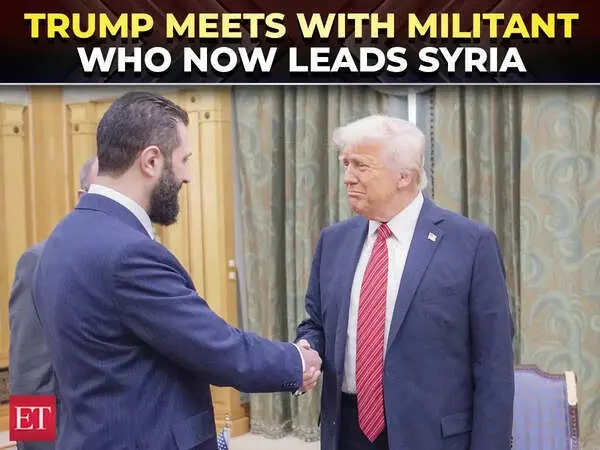
The clearest sign came this week in Washington, where US President Donald Trump welcomed Abu Mohammad al-Jolani — former al-Qaeda emir in Syria and a founding member of ISIS in Iraq — into the Oval Office for formal talks.
The unprecedented invitation stunned much of the world. But for Iranian academic Professor Mohammad Marandi, the real shock is not that Trump met Jolani — it is why that meeting happened at all.
“When we see Jolani, who was one of the founding members of ISIS and the head of al-Qaeda in Syria, in the White House, it is disgusting,” Marandi said. “But the people who invited Jolani are no different from him. This is part of a long-term Israeli project to break Syria into pieces.”
The White House embrace of Jolani, he argued, is not an American eccentricity but the culmination of a broader geopolitical design in which Israel has been the constant architect, beneficiary and guiding force.
Israel’s Goal: A Fragmented Syria Under Competing Warlords
Marandi insists the key to understanding both the war in Syria and Jolani’s recent international parade — from Moscow to Washington — is Israel’s strategic vision for the region.
“The Israeli regime wants a fragmented Syria,” he said. “They want Jolani to control parts of Syria, while the south, the coast, the east and northeast fall under different spheres of influence. They want Syria broken into pieces. They want weak neighbours. That has always been the objective.”
The plan, he said, resembles Israel’s long-standing approach to Lebanon: encourage the rise of militia rulers, weaken central authority, and ensure permanent instability. In this model, Jolani — having rebranded himself from al-Qaeda commander to quasi-statesman — is simply one of many tools.
Marandi stresses a critical point often ignored in Western media:
Israel has not once attempted to kill Jolani, despite carrying out hundreds of assassinations across the region.
“They murdered senior officials in Hezbollah, they tried to murder senior officials in Iran, they killed Yemen’s prime ministers,” he said. “But they have never targeted Jolani. Because he is in their camp. He serves their purpose.”
The Trump–Jolani Meeting: A Symptom of Israeli Influence, Not an Aberration
While the Trump–Jolani summit dominated headlines, Marandi sees it as a symptom, not the disease.
Israel’s power over US Middle East policy, he argued, has now reached a level where Washington openly legitimises militants who directly contributed to Syria’s destruction — because those militants further Israeli strategic goals.
“The United States has reached a new low in being so blunt about their partners in crime,” Marandi said. “Jolani in the White House is simply the mask falling off.”
Trump may have offered the optics of the meeting, but the political logic behind it is Israeli:
Reward Jolani, empower his faction, weaken Damascus, and maintain a fractured Syrian map that prevents the rise of a unified state aligned with Iran or Hezbollah.
Jolani’s earlier visit to Moscow only reinforces this logic, Marandi argued, as Russia manoeuvres to limit Israel’s influence in parts of Syria while avoiding direct confrontation.
How Jolani Became Useful: Rebranding Al-Qaeda Through Western Help
To understand Jolani’s sudden respectability, Marandi traced his journey from ISIS-linked commander to Western-approved faction leader.
- Originally ISIS-linked: Jolani emerged from the Islamic State in Iraq and was sent to Syria to form Jabhat al-Nusra.
- Supported by al-Qaeda central: When ISIS split, al-Qaeda senior leadership backed Jolani.
- Rebranding with consent: Years later, when Jolani announced he was “breaking from al-Qaeda,” the group’s leaders were literally in the room.
- Western media rehabilitation: CNN, Al Jazeera, and other broadcasters gave him platforms to soften his image.
“This was done in coordination with Western intelligence agencies,” Marandi said. “They wanted him to rebrand so he could take political power. It was clear as day.”
The Trump administration’s embrace is, in his view, simply the final stage of this rebranding.
And at the Centre of It All: Israel’s Strategic Calculations
The story of Syria, Marandi argues, cannot be understood in isolation from Israel’s broader regional strategy.
1. Weakening the ‘Axis of Resistance’
Syria’s fragmentation severs logistical and political ties between Iran, Hezbollah, and Palestinian groups — long a key Israeli objective.
2. Eliminating Damascus as a Support Base for Palestinians
Before the war, Damascus quietly facilitated weapons transfers to the West Bank and Gaza.
“That has come to an end,” Marandi said. “Israel benefits directly.”
3. Securing the Golan Heights
By destabilising southern Syria and empowering militias, Israel reinforces its de facto annexation of the Golan.
4. Preventing Russian or Iranian consolidation
Israel’s airstrikes, intelligence operations and influence campaigns work to limit any rival power from fully stabilising the Syrian state.
Turkey’s Miscalculation: Erdogan’s Dreams vs Israel’s Results
Although Turkey poured money, arms and fighters into Syria, Marandi argues it ultimately benefited Israel more than Ankara.
Erdogan imagined a neo-Ottoman sphere of influence stretching over northern Syria.
Israel, however, emerged as the real victor.
“Turkey wanted a big piece of the cake,” Marandi said. “But the real victor is Netanyahu.”
Erdogan now faces the consequences:
- A badly damaged Turkish economy
- A Syrian conflict that has become a costly burden
- A domestic security problem from militants he once supported
- A strategic trap:
Turkey cannot fully confront Israel, and cannot fully abandon the Syrian rebels either
This has pushed Erdogan into awkward overtures toward Russia and the “axis of resistance,” not out of principle but survival.
US Expansion in Syria Reflects Israeli Priorities
Trump campaigned on leaving Syria, yet the opposite is happening.
“Apparently, the US foothold in Syria is going to increase,” Marandi said. “The US is expanding its presence in the east, northeast, and now potentially around Damascus.”
Why?
Because Israel wants permanent US boots in Syria — guarding oil fields, blocking Iranian supply lines, and preventing Syrian reunification.
Lebanon, Hezbollah and the Emerging Front Against Israel
Marandi turned to Lebanon, where Israel’s airstrikes and assassinations continue daily.
Western governments remain silent, he said, because Israel’s actions align with their goals of containing Hezbollah.
Yet Hezbollah has adapted, rearmed and learned from Gaza and Syria.
Marandi warns that:
- Another Israeli war on Lebanon will not produce victory
- Lebanon’s army is deliberately kept weak to justify Israeli dominance
- Gulf states and Turkey now see unchecked Israeli power as a threat to themselves
“People know the only thing that protects Lebanon from annexation is the resistance,” he said.
Iran, Sanctions and the Failed Western Strategy
Marandi describes Western attempts to reinstate UN sanctions through the JCPOA “snapback” as a strategic blunder that collapsed once Russia and China rejected it.
Meanwhile, Iran’s economy — particularly oil trade with China — remains functional despite hardship.
And after Israel’s recent airstrikes on Iranian territory, Marandi claims the regional power equation has shifted.
“They attacked — and now everyone has seen the result. Iran came out on top. Iran is preparing for the second phase.”
Shifting Opinion in the US: Israel Losing the Narrative
Perhaps the most surprising development Marandi highlights is the shift in US public opinion, especially among younger generations — including young Jews.
He cites the election of Zoran Mandani in New York as evidence that:
- The Israel lobby is losing cultural influence
- Anti-war and pro-Palestinian positions no longer guarantee defeat
- American Jews are increasingly distinguishing Judaism from Zionism
“Their power is not infinite,” Marandi said. “People see the crimes of this regime, and they see that ordinary Jews are not responsible for it.”
Israel’s Strategic Dead End
Despite its destructive successes in Syria, Marandi argues Israel faces the same long-term crisis across the region:
- Growing global outrage at its actions
- Declining political cover in the US and Europe
- Rising military capacity among its adversaries
- Unpredictable elections in Washington
- A permanent legitimacy crisis after Gaza
“This is a regime that has lost its image in the eyes of the world,” he said. “Its support is evaporating. The more aggressive it behaves, the worse it becomes for its survival.”
Conclusion: Jolani in the White House as the Symbol of a Larger System
In Marandi’s view, the sight of Jolani sitting obediently across from Trump in the Oval Office is the perfect encapsulation of a deeper geopolitical truth:
Israel’s regional agenda has so thoroughly shaped US policy that Washington is now willing to embrace a former ISIS-linked warlord if it helps weaken Syria and the axis of resistance.
The meeting is therefore less a headline than a harbinger —
a sign that the strategic architecture built over the past decade has reached a new level of impunity.
“We are up against a murderous regime,” Marandi concluded. “But the Palestinian cause is not going away. And neither is the resistance. Jolani in the White House only shows how desperate they have become.”