


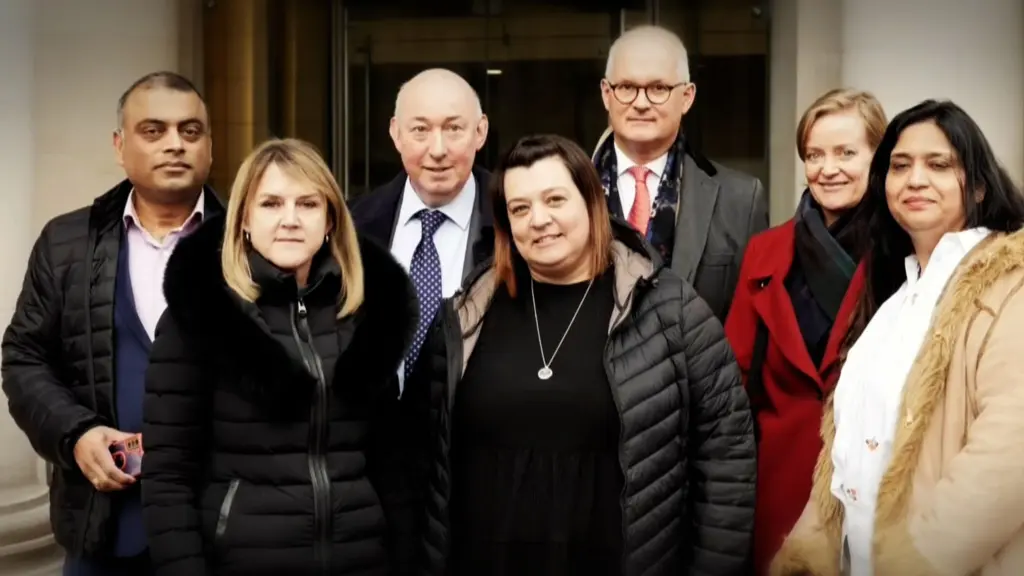
First exposed by Computer Weekly in 2009, this is the story of how a faulty computer system, a culture of denial, and decades of institutional arrogance created the worst miscarriage of justice in modern British history — destroying lives, bankrupting families, and shattering public trust in the Post Office.
Outside the Royal Courts of Justice on 23 April 2021, as 39 wrongful convictions were finally overturned, sub-postmistress Jo Hamilton spoke through tears to a crowd of reporters and supporters. Her words captured the enormity of the moment:
“People died.”
It was no exaggeration. The public inquiry would later confirm that at least thirteen victims had taken their own lives, and many more died waiting for justice. For over two decades, hundreds of ordinary Post Office workers were branded thieves because of faulty accounting software — a computer system called Horizon, built and maintained by Fujitsu, and defended at all costs by the Post Office and the British state.
A Computer Error That Broke Britain’s Trust
When Horizon was rolled out in 1999, it was meant to modernise 18,000 Post Office branches. Instead, it became the backbone of a national catastrophe.
From 1999 to 2015, more than 700 sub-postmasters were accused of theft, fraud, or false accounting when Horizon’s data showed phantom shortfalls. In reality, the software was wrong — riddled with bugs, data corruptions, and remote-access edits by Fujitsu engineers.
“They Told Me I Was the Only One”
“Every time I called to say the figures didn’t add up, they told me I was the only one having problems,” one former sub-postmistress said.
Many were ordered to repay losses from their own pockets, remortgaging homes to cover non-existent deficits.
- Martin Griffiths took his life in 2013 after being accused of a £60,000 shortfall.
- Seema Misra gave birth in prison after a wrongful conviction.
- Jo Hamilton lost her home to repay £36,000 she never took.
- Lee Castleton was bankrupted after losing his case in court.
- Julian Wilson died of cancer before his name was cleared.
These stories form the human ledger of Britain’s digital disaster.
The First to See the Truth: Computer Weekly, 2009
In February 2009, Computer Weekly reporter Rebecca Thomson broke the silence with “Bankruptcy, prosecution and disrupted lives.” Her investigation connected isolated cases into a national pattern, forcing the first parliamentary questions.
“They were ordinary people who had never been in trouble,” Thomson recalled. “Every one of them said the same thing — the computer was wrong, but nobody believed them.”
Alan Bates, who would later lead the class-action lawsuit, called it “the first spark of truth.”
Forced Guilty Pleas and the “Do Not Blame Horizon” Clause
Defendants were told to plead guilty to false accounting — on the condition they never blamed Horizon. Some agreements barred lawyers from even mentioning the IT system.
“They made me admit guilt to save myself,” one ex-postmaster said.
Sir Wyn Williams, who chairs the public inquiry, described the practice as “deeply troubling,” accusing the Post Office of protecting a corporate image instead of justice.
The Legal Turning Point: Bates v Post Office (2019)
The 2019 High Court ruling by Mr Justice Fraser declared Horizon “not remotely robust” and accused the Post Office of treating sub-postmasters “in an oppressive manner.”
The case vindicated campaigners but left most victims financially stranded: after legal costs, many received less than £20,000 from a £57.75m settlement.
The Price of Failure and the Fujitsu Trail
The Horizon contract, launched in 1999, began at £548m. Renewals, maintenance, and litigation support have since pushed total taxpayer payments past £2.5 billion. Fujitsu executives took £37 million in pay and bonuses while the system malfunctioned.
In 2025, the Post Office agreed another £600 million extension to keep Horizon operational while its replacement system is built.
Fujitsu Today: Still Embedded in Britain’s Systems
Despite its shame, Fujitsu remains one of Whitehall’s biggest suppliers:
- £3.4 billion in active Treasury-affiliated contracts since 2019.
- Systems for HMRC, the FCA, Home Office, and Ministry of Defence.
- A £125 million Northern Ireland land-registry project and a £220 million HMRC data-centre deal.
“Fujitsu failed hundreds of innocent people — yet it still runs our tax systems,” one MP remarked. “That’s not accountability. That’s inertia.”
From Denial to Contrition
The face of that denial was Paula Vennells, Post Office CEO (2012–2019). She told MPs there was “no evidence” of faults, then left with a CBE for “services to the Post Office.” She returned it in 2024 after public outrage, saying:
“I am deeply sorry for the suffering caused to sub-postmasters and their families.”
Government Responses and the 2025 Turning Point
The Post Office is government-owned, meaning ministers oversaw both the prosecutions and the cover-ups.
In 2024, Prime Minister Rishi Sunak introduced the Post Office (Horizon System) Offences Act, granting mass exoneration.
After Labour’s 2024 election victory, Keir Starmer promised faster compensation and deeper reform.
October 2025: Free Legal Advice for All Victims
On 9 October 2025, following the first report of the Horizon IT public inquiry, the government announced that all victims seeking compensation will now be entitled to free legal advice — for the first time.
At Aldwych House in central London, campaigners gathered outside the inquiry holding two banners: a blue one reading “Justice for Subpostmasters Alliance” and a red one marked “SOS: Support Our Sub-postmasters.”
Business Secretary Peter Kyle said the move was a “crucial step” toward full justice:
“There is clearly more to do to bring justice to those affected, and accepting the inquiry’s recommendations is vital to that process.”
The change could dramatically increase payouts for many victims who previously accepted low offers without legal help.
Three separate compensation schemes now exist — all criticised for delay and complexity — but victims under the Horizon Shortfall Scheme (HSS) will, for the first time, have government-funded lawyers to advise on fixed-sum offers and appeals.
The government also pledged to:
- Create an appeals process for those who accepted fixed payments under the HSS.
- Extend the deadline for new claims to January 2026.
- Provide clearer definitions of “full and fair redress.”
- Begin work on a restorative-justice project for sub-postmasters.
So far, more than £1.2 billion has been paid to 9,000 claimants, but hundreds remain unpaid.
Tony Downey, who bought the Hawkshead Post Office in 2001, lost his home and £35,000 in savings trying to “balance” Horizon’s phantom accounts.
“It just seems to be battling, all the time, to get a little bit more,” he said. “We’re exhausted with it.”
His solicitor Neil Hudgell, representing hundreds of victims, welcomed the reforms but warned of ongoing delays:
“It’s proper that applicants are entitled to have their cases fully assessed before electing to accept a fixed sum … but unless more resources are invested, we’ll still be talking about compensation in three to five years’ time.”
Timeline of Government Responses
| Year | Conservative (Sunak) | Labour (Starmer) |
|---|---|---|
| Jan 2024 | ITV’s Mr Bates vs The Post Office sparks outrage | — |
| May 2024 | Mass-exoneration bill passes; £1 bn fund launched | — |
| Jul 2024 | Labour wins election; pledges faster justice | ✅ |
| Jan 2025 | Commons committee: remove Post Office from oversight | ✅ |
| Oct 2025 | Free legal advice announced for all victims; new appeals process and extended deadlines | ✅ |
The Inquiry: Britain on Trial
The Horizon IT Inquiry, chaired by Sir Wyn Williams, continues to expose edited evidence and withheld data. He has described the scandal as
“a corporate culture of denial and institutional indifference.”
Police and prosecutors are now examining whether senior officials and legal advisers committed misconduct in public office, perjury, or conspiracy to pervert the course of justice.
Editorial — Exposure, Accountability, and the Future
The Horizon story reveals the collision between human error, technological faith, and bureaucratic power.
Computer Weekly sounded the alarm in 2009; Alan Bates, Nick Wallis, and survivors like Jo Hamilton refused to let the story die.
Billions went to Fujitsu; victims got pennies. Now, at last, they will have state-funded lawyers to fight for what they are owed — a measure of equality that should have existed from the start.
“It was never just about a computer,” said one former postmaster. “It was a lie dressed in code.”
The Shadow of Criminal Conspiracy
Evidence now points to deliberate deceit. If prosecutions follow, the scandal will move beyond failure to criminal accountability — for those who chose to protect a system over the people it destroyed.
The Meaning of the Scandal
The Horizon affair will stand as a warning to every democracy that entrusts justice to software and bureaucracy.
For the dead, justice came too late. For the living, the fight continues — this time with the state finally footing their legal bill.
“Trust has been broken,” Fujitsu’s Paul Patterson told Parliament.
“Trust in technology — and trust in the institutions that use it.”
Rebuilding that trust is Britain’s unfinished work.