


A classified internal document recently circulated within the Israel Defense Forces (IDF) delivers a blunt assessment: Operation Gideon’s Chariots, the months-long Gaza offensive launched in May 2025, failed to meet its stated goals—namely, dismantling Hamas and securing the release of hostages. The leak confirms what many critics at home and abroad have warned: the war has become unwinnable on its own terms, leaving Israel politically isolated and militarily overstretched.
“Every Possible Mistake”
The report opens with a stark admission: “Israel made every possible mistake.” It accuses the army of acting “contrary to its own military doctrine”—by mismanaging resources, exhausting its forces, undermining international legitimacy, and even inadvertently supplying Hamas through poorly managed humanitarian aid corridors.
The assessment notes:
- Reliance on “deterrence logic rather than decisive victory,”
- Incompetence in aid planning that enabled Hamas propaganda,
- Slow, repetitive maneuvers that prioritized troop protection at the cost of strategic momentum, and
- Attrition, manpower strain, equipment fatigue, and poor preparation for protracted urban warfare.
Despite enormous destruction, Hamas retained much of its operational infrastructure, allowing it to withstand Israel’s most ambitious ground push in years.
The Human Cost
Since 7 October 2023, Israeli military actions have caused catastrophic losses:
- 63,000+ Palestinians killed in Gaza, roughly 83% civilians (based on a leaked IDF fighter database).
- 987 Palestinians killed in the West Bank in the same period.
- Health workers: between 645 (verified) and 1,580+ (MoH) killed. At least 50 doctors and senior specialists are confirmed dead.
- Journalists and media workers: 189+ killed, making Gaza the deadliest conflict for reporters in modern history.
On the Israeli side:
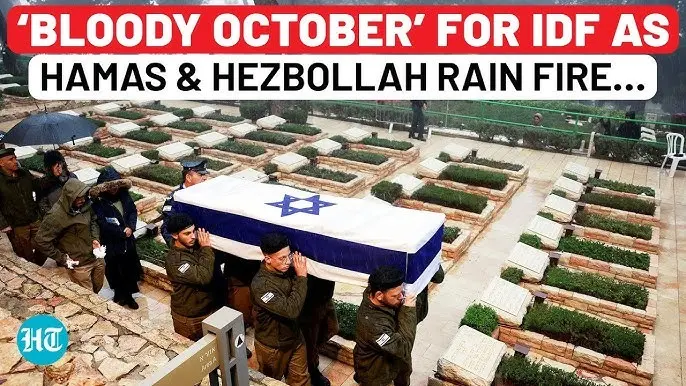
- ~900 IDF soldiers killed and 6,213 wounded since the war began.
- Over 1,100 discharged for PTSD, with trauma cases up nearly tenfold.
- ~50 soldier suicides reported since October 2023, though official tallies remain incomplete.
Hostages: Killed by Their Own Side
One of the most damning aspects of the war has been the fate of Israeli hostages in Gaza.
- On 15 December 2023, IDF soldiers shot and killed three hostages—Yotam Haim, Alon Shamriz, and Samer Talalka—after they emerged waving white flags.
- Later probes concluded that several other hostages were “likely” killed by Israeli strikes targeting Hamas positions.
- An investigation by Haaretz found that IDF operations endangered the lives of at least 54 hostages, with around 20 killed as a direct or indirect result of military actions.
As of late August 2025, 148 hostages had been returned alive, 58 bodies repatriated, and around 48–50 still believed in Gaza—20 thought alive. The claim that Hamas executed all captives has been undercut by evidence of IDF fire killing their own citizens.
Timeline of a Failed Campaign
- May 2025: Operation Gideon’s Chariots begins amid high expectations.
- June–July: Gaza City and Khan Younis pummeled; international outrage grows.
- August: The offensive ends with no decisive breakthrough; the leaked assessment circulates internally, damning the campaign as strategically bankrupt.
The sequence mirrors the 2006 Lebanon War, when Israel’s overwhelming firepower failed to neutralize Hezbollah. Hamas’s survival now echoes that precedent, presenting survival itself as victory.
Opposition and Internal Dissent
The leaked report has deepened divisions inside Israel:
- Yair Lapid accused Netanyahu of leading Israel into “a war without an exit strategy.”
- Benny Gantz, who resigned from the war cabinet earlier, warned of “another Lebanon 2006, only worse.”
- Left-leaning parties, including Meretz and Hadash, have demanded a parliamentary inquiry.
Meanwhile, hostage families continue to protest, accusing the government of sacrificing lives for political survival.
U.S. Warnings Ignored
The leak also validates what the United States had warned long before. Senior U.S. officials repeatedly told Israel that the war “could not be won militarily” and urged Netanyahu’s government to pivot toward political solutions. By late 2024, the White House had already concluded that Israel had achieved all it could on the battlefield and that “there was nothing more that could be gained militarily.”
Despite these warnings, the Israeli government pressed on with its Gaza campaign, gambling on total victory that never came.
International Legal and Diplomatic Fallout
The IDF’s own admissions reinforce a growing international case:
- The International Court of Justice continues to deliberate on South Africa’s genocide petition.
- Several European states have suspended arms sales and moved to recognize Palestinian statehood.
- The UN Human Rights Council and fact-finding missions accuse Israel of targeting civilians, with reports of people shot while fleeing under white flags.
Far from strengthening its deterrence, Israel’s actions have left it more isolated diplomatically than at any point in its history.
What Comes Next?
The IDF’s assessment leaves Israel at a crossroads:
- Escalate further, risking regional war with Hezbollah and Iran, or
- Negotiate, which many Israelis would interpret as defeat.
With manpower exhausted, equipment degraded, and international patience worn thin, military leaders privately acknowledge the war cannot be continued indefinitely. Yet Netanyahu’s government insists on pressing ahead, even as its own army warns of diminishing returns.
The leaked IDF document is more than a battlefield critique—it is a political reckoning. It shows that Israel’s Gaza war has failed, that its leaders ignored both domestic dissent and American warnings, and that it has paid the price in human lives, military morale, and international legitimacy.
The question now facing Israelis is not just what went wrong, but whether their leaders have the courage to admit that this war—like the U.S. predicted long ago—cannot be won by force of arms alone.