


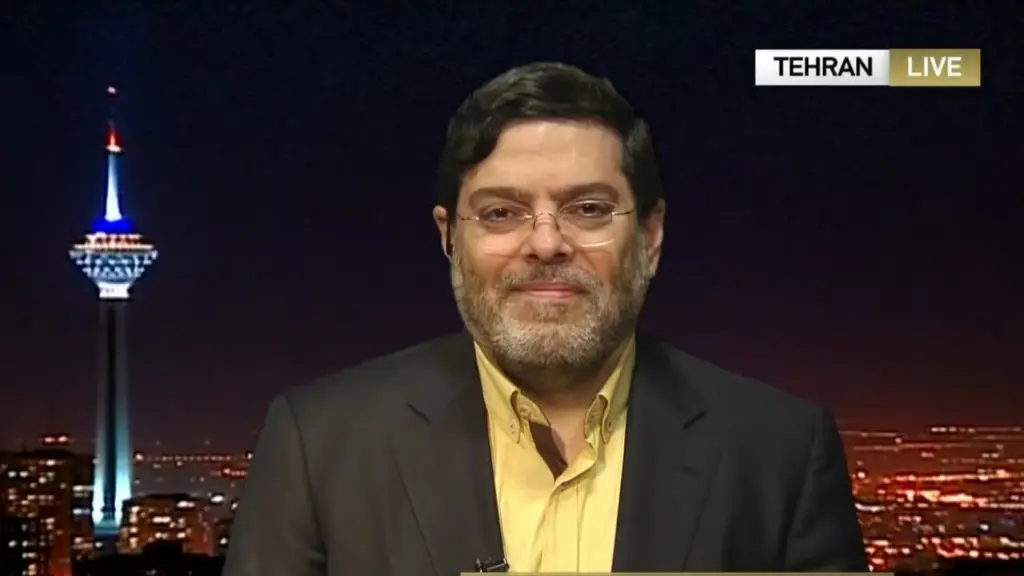
In a wide-ranging interview, an Iranian commentator argues Israel has “already lost” by forfeiting legitimacy, as worldwide resistance broadens from Gaza’s tunnels to city streets — and a shifting world order hastens the decline of Western power…
Lede
Contrary to “the story Western media keeps selling,” Israel has already suffered a historic defeat — not measured in territory but in legitimacy — an Iranian analyst contends in a sweeping discussion about Gaza, global protest, and the rise of a multipolar world. “The mood across the world has changed. The Israeli regime is despised,” he says, insisting that the collapse, when it comes, “is going to be historic.”
A loss you can’t price
The analyst frames Israel’s setbacks as cumulative and civilizational. Yes, he says, Israel has inflicted damage — “weakened Hezbollah to the north,” devastated Syria “with the help of Erdogan and NATO,” and carried out killings in Yemen, Iran, and Iraq — but at immense cost. “Their economy has been badly damaged … people are tired.” Most consequential, he argues, is a legitimacy freefall: “How do you calculate this loss in dollars, euros, yuan? You can’t.”
What makes the current moment unique, he says, is that alleged atrocities are “happening live in front of us for two years,” unlike earlier colonial crimes dimly remembered through “a few pictures” in textbooks. In his telling, Western media have become “apologists,” enabling a violence “worse than the Holocaust” because “it’s being done in front of our eyes” — claims that will stain reputations for generations: “Their grandchildren are going to look back and see how they were apologists for a holocaust.”
‘Do the right thing’ — even without instant results
A recurring theme is steadfastness over outcomes. Drawing on Shia narratives of martyrdom and resistance, he argues despair is “the enemy’s most important tool” and insists that participation — from mass marches in Australia to a lone protester outside Israel’s embassy in Seoul — aggregates into power. He recalls marching as a PhD student in Britain against the wars in Afghanistan and Iraq: those protests “did not stop the war,” but “changed the mentality” and seeded today’s distrust of Western establishments.
“Whether we succeed or not is irrelevant. What we’re doing is the right thing. We should take satisfaction in resistance.”
Media on trial
He levels blistering criticism at big newsrooms. He cites a hospital strike sequence he characterizes as “double tap … triple … four shells,” and blasts agencies that, in his view, echoed official narratives even when their own cameras showed otherwise. “Everyone is being exposed,” he says — from outlets to NGOs to governments that profess solidarity with Palestinians while “doing business and trade with the Israelis.” He points to a Canadian broadcaster’s public apology over word choice as emblematic of a broader capitulation.
On the ground: resilience and evolving capabilities
Inside Gaza, he says, resistance remains unbroken: “There are no white flags.” A “sophisticated operation … last night” (details not provided in the conversation) allegedly showcased new capabilities — particularly in tunnels — that he claims are spreading “across the axis of resistance.”
‘Jenga tower’ and the Vietnam analogy
Observers liken Israel to a “Jenga tower” with pieces steadily pulled until collapse. The analyst agrees, pushing past Vietnam parallels to argue today’s 24/7, televised war — “supported, funded, justified in front of our eyes” — is singular. Brutality, he says, doesn’t create security; it stiffens resistance.
Multipolar momentum — and Western self-isolating
Shifting to geopolitics, the analyst describes a recent China trip as a tableau of the “Global South on the rise,” from BRICS to the Shanghai Cooperation Organization (SCO). He argues Western policy has become a “catalyst” for its own marginalization — antagonizing India, Brazil, Russia, China, and Iran while reviving the “snapback” sanctions mechanism against Tehran. The practical impact on Iran, he predicts, will be “psychological for a few weeks,” but politically clarifying: “They’ve told ordinary Iranians: we don’t want you.”
Educational flows also reflect the turn, he says — more students now heading East. The upshot: “Iran is moving toward this new world order and multipolarity. The decision has been made.”
Focus the fire: don’t manufacture new enemies
Responding to Western frustration that China or Russia “aren’t doing enough” on Gaza, he urges realism and priority-setting. The resistance “is not trying to antagonize” the Global South; its aim is to “cultivate as many friends” as possible while concentrating on those “behind the genocide.” Expecting far-off powers to sever ties with Israel, he argues, is misplaced when regional states maintain embassies and trade. “Our wrath should be directed at those who are behind the genocide.”
Digital memory and future judgment
Because this is “the digital age,” he warns, public stances will be indelible. “Names will be remembered” — journalists, diplomats, politicians who justified or enabled — and “seen as sinister monsters” by future generations.
Signs of a shifting United States
Despite the grim picture, he sees movement inside America: “time is not on the side of the Israeli regime.” Online shows, he notes, are “some of the best,” often hosted by Jewish voices critical of Israel; even senators now lambaste killings of American citizens. The turning point, he suggests, has been “images of starving kids,” accelerating a moral realignment.
Quick-fire Q&A highlights
- “Why can’t Iran clamp down like North Korea? Why trust the West?”
He rejects the premise that Iran is a monolith: “There are different voices in Iran — I’m glad there are.” Policy, he says, remains consistent: support for the “axis of resistance,” continued defense and nuclear capabilities, and material backing that, in his telling, undergirds Gaza’s and Hezbollah’s tunnel expertise. - “Did Russia aid Israel during the 12-day war?”
He dismisses the claim as agenda-driven and evidence-free: most Iranian air defenses aren’t Russian, are mobile, and U.S. satellites, not Russian assets, dominate overhead. Moscow and Tehran, he says, have a pragmatic relationship with friction on both sides, but not betrayal.
The takeaway
The interview knits together street-level defiance, information warfare, and great-power realignment into a single claim: Israel’s strategic defeat is already sealed by a legitimacy collapse, and the West’s credibility is “destroyed,” not dented. The task, the analyst insists, is to keep pushing — online, on campuses, and in the streets — as a multipolar world takes shape.
“I am very optimistic about the future … There’s light at the end of the tunnel. It will be tough. We will make sacrifices. But we have to stop this genocidal war, support the Palestinian people, and bring an end to this regime. I have no doubt it’s going to happen.”