


The UK government’s decision to ban the protest group Palestine Action under terrorism legislation has drawn fierce condemnation from across the political spectrum, civil society, and now, the United Nations’ highest human rights authority.
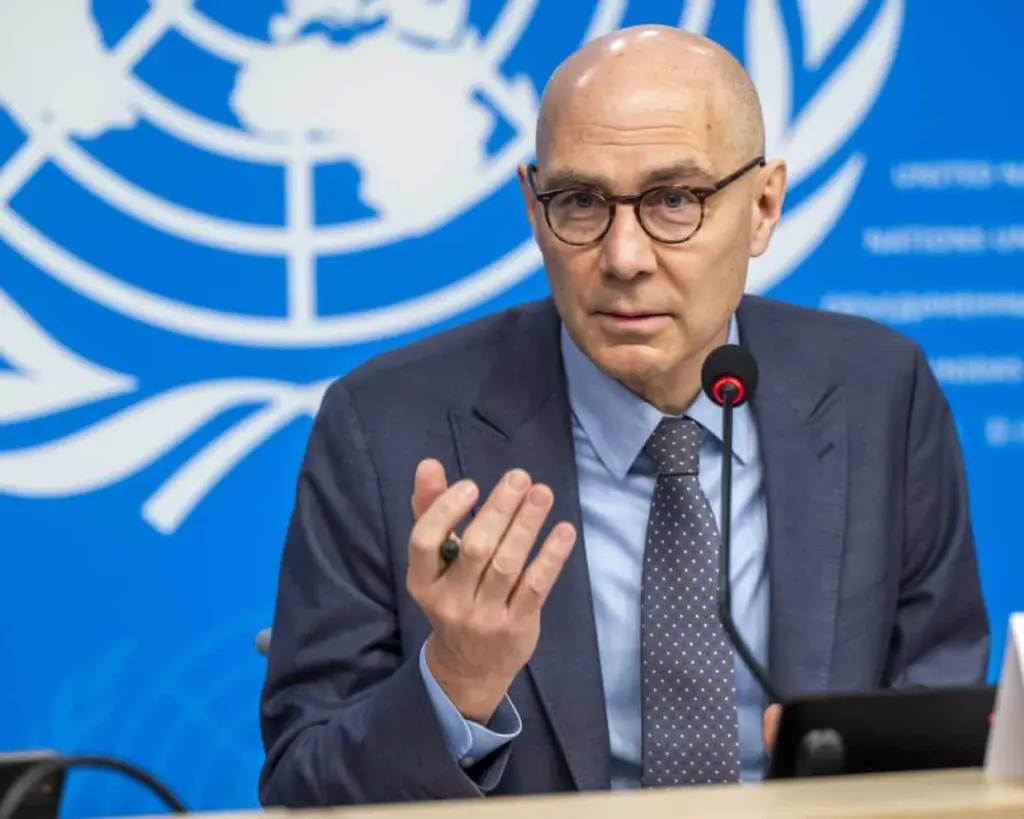
Volker Türk, the UN High Commissioner for Human Rights, described the proscription as “disturbing,” warning it represents a dangerous abuse of counter-terrorism powers and a direct attack on fundamental freedoms protected under international law.
“The ban appears disproportionate and unnecessary,” said Türk, an Austrian diplomat and former refugee law expert who has served as UN rights chief since 2022. “It limits the rights of many people involved with and supportive of Palestine Action who have not themselves engaged in any underlying criminal activity but rather exercised their rights to freedom of expression, peaceful assembly and association.”
Crackdown on Protest Branded ‘Deliberate and Draconian’
On 2 July, Parliament approved the Home Office’s move to proscribe Palestine Action under the Terrorism Act 2000, following a high-profile break-in at RAF Brize Norton, where activists sprayed two RAF Voyager aircraft—reportedly used in support of the Israeli military—with red paint. The government claimed the action caused £7 million in damage.
The ban, which came into effect on 5 July, makes it a criminal offence—punishable by up to 14 years in prison—to be a member of, express support for, or even display the symbols of Palestine Action.
Since then, over 170 people have been arrested, with several charged under terrorism legislation simply for holding placards, shouting slogans, or wearing logos supporting the group. According to a report, journalists, artists, students, and even elderly faith leaders have been caught in the dragnet.
The Home Office has acknowledged the severity of its approach, stating:
“We accept, of course, that it is draconian—and deliberately so.”
UN Alarm: Terrorism Law Misapplied to Property Damage
Türk warned the UK’s legal definition of terrorism—which includes “serious damage to property”—violates international legal norms that reserve terrorism designations for acts involving intent to kill or seriously injure civilians or coerce governments.
“It misuses the gravity and impact of terrorism to expand it beyond those clear boundaries,” he said. “Conduct that is already criminal under the law is being relabelled as terrorism, with serious consequences for civil liberties.”
The UN’s statement was echoed by leading civil liberties groups including Amnesty International, Liberty, and CAGE, who argue the proscription is part of an escalating authoritarian shift under the guise of national security.
Palestine Action: Civil Disobedience, Not Terrorism
Founded in 2020 by activists Huda Ammori and Richard Barnard, Palestine Action is a direct-action network that has targeted arms manufacturers—primarily Elbit Systems, Israel’s largest weapons firm, which operates in multiple UK locations.
The group has never been accused of harming individuals, instead focusing on symbolic and disruptive protests. Nevertheless, the government lumped it into a proscription order alongside two neo-Nazi groups, forcing MPs into a binary vote that critics described as a “political trap.”
According to our feature published on June 25, legal scholars have described the move as “absurd and authoritarian,” arguing that it criminalises moral opposition to UK complicity in foreign war crimes.
Mass Arrests and Frozen Bank Accounts
The ban’s chilling effect has been immediate. As reported by GreatReporter on July 21, several UK-based pro-Palestinian organisations—including charities and student groups—have had their bank accounts frozen, despite having no link to Palestine Action.
Meanwhile, over 100 people were arrested in coordinated protests across London, Manchester, Bristol, Edinburgh, and Truro. In one case, an 80-year-old retired priest and a university professor were arrested outside Parliament Square for holding placards reading: “I support Palestine Action.”
At a protest near the Gandhi statue, multiple demonstrators were charged with racially aggravated public order offences, sparking further outrage over what campaigners called “blatant political policing.”
Legal Challenge Underway
A legal challenge brought by Palestine Action is now being heard in the High Court, with a verdict expected by 30 July. Ammori and her legal team argue that the ban constitutes an unlawful restriction on fundamental freedoms and sets a dangerous precedent.
In court filings reviewed by GreatReporter, legal experts argued the group’s tactics fall well within the bounds of legitimate protest, and warned the government is “weaponising terror law” to silence dissent against its foreign policy.
A Global Turning Point?
The UK’s decision has drawn international attention and condemnation. Several prominent European legal scholars have called for a review by the UN Human Rights Council, and activists have warned the move could embolden other governments to suppress protest under the guise of security.
As Volker Türk put it:
“This is at odds with the UK’s obligations under international human rights law. Protest is not terrorism. Civil disobedience is not extremism.”
If the ban remains in place, the implications for civil society, press freedom, and lawful protest in the UK—and globally—could be profound.
Legal Disclaimer: This article is intended solely for the purposes of news reporting and public interest journalism. Any references to, or images of, Palestine Action—including logos, clothing, or other identifying articles—are presented strictly in a journalistic context. Their inclusion does not imply support for or affiliation with any proscribed organisation. The publisher remains neutral and does not endorse or promote the views or activities of any group mentioned.