


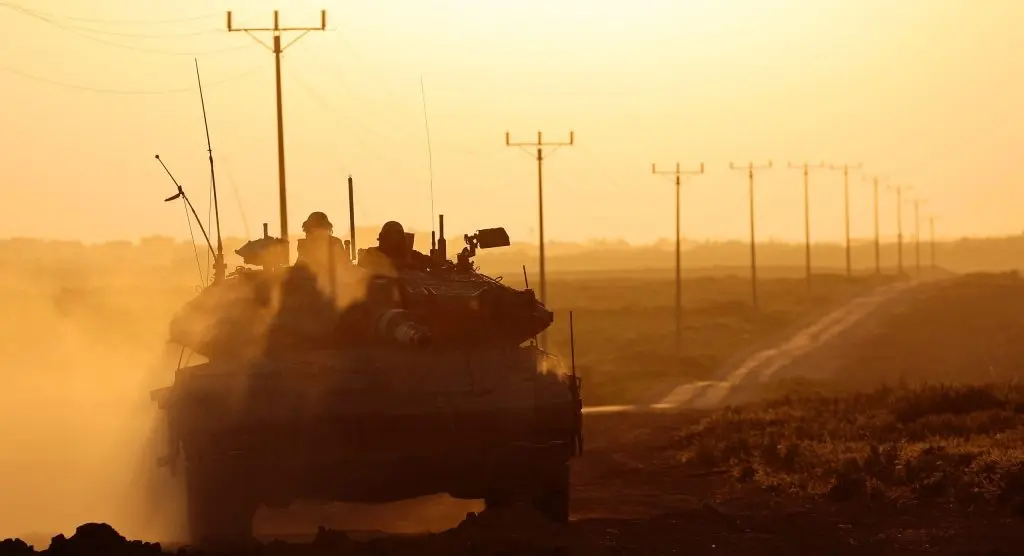
The Israeli military brands itself as “the most moral army in the world.” It’s a phrase repeated endlessly by official spokespeople, echoed across Western media, and wielded like a shield against war crimes allegations. But behind the myth lies a darker truth: the Israel Defense Forces (IDF) have become an institutional crucible—producing some of the most violent, disciplined, and globalized criminals of the modern era.
Nowhere is this contradiction more stark than in Gaza. Over the past two years alone, Israel has killed more than 17,000 children—independently verified victims, many deliberately targeted and recorded. These atrocities, while sickening to the civilised world, are often dismissed—or, more disturbingly, celebrated—within Israeli society, as seen in social media posts and candid interviews. This normalization of violence explains how a military occupation has morphed into a generator of international criminal syndicates.
From Combat Units to Cartels
The pipeline from elite IDF units to global crime networks is no accident. Veterans are trained in reconnaissance, demolitions, surveillance, intelligence, and counterinsurgency—skills that transition with eerie ease into drug logistics, money laundering, contract killings, and smuggling. Units like Sayeret Matkal and the Golani Brigade have produced operatives who would later rise as kingpins in international syndicates, demonstrating a chilling continuity between military precision and criminal enterprise.
Many former soldiers go on to establish or work for private military firms operating in conflict zones under the guise of “security consultancies.” These companies often double as fronts for smuggling rings, arms dealing, or covert mercenary operations. Their ties to Israeli tech and defense sectors allow them to cloak illicit dealings in the language of national security and innovation.
The Abergil Cartel: From Boot Camp to Mafia Empire
Among the most notorious products of this ecosystem is the Abergil crime family, founded by brothers Yaakov, Avi, and Itzhak Abergil. Of Moroccan-Jewish origin and steeped in a culture of militarism and poverty, the Abergils transformed into a transnational empire trafficking ecstasy, arms, and laundered millions through nightlife venues, ports, and European shell companies.
In 2022, Itzhak Abergil received three life sentences for his role in a range of crimes, including the attempted assassination of rival mob boss Zeev Rosenstein and the murder of civilians during a botched hit in Tel Aviv. Yet their extradition and prosecution, rare moments of international cooperation, did not dismantle the organization—it merely scattered its operations across borders, where militarized discipline continued to serve its criminal growth.
Zeev Rosenstein: The White-Collar Warlord
Zeev Rosenstein, another IDF alumnus, built one of the world’s most formidable ecstasy networks. Operating via decentralized, cell-based structures akin to intelligence or terrorist groups, he employed ex-IDF and police veterans as muscle and logistics officers. His empire blended legitimate real estate, shipping, and tech investments with assassinations, money laundering, and international narcotics trade. He was extradited to the U.S. in 2006, pled guilty, and was sentenced in Florida—but his legacy illustrates the enduring overlap between Israeli institutional expertise and high-level organized crime.
A Complex Criminal Landscape
Israel is home to at least 16 organized crime families—five major and eleven smaller groups—spanning both Jewish and Arab origins. These include the Abergils, Alperons, Abutbuls, Shirazis, Dumranis, and the syndicate previously led by Rosenstein. They are involved in murder, gambling, extortion, human trafficking, and global drug distribution.
Arab-Israeli clans—such as the Abdel-Kader, Jarushi, Qarajah, and Abu Latif families—engage in similar activities, and often collaborate with their Jewish counterparts. Many of these operations emerged from socio-economic marginalization and quickly evolved into international networks spanning Europe, the U.S., and Latin America.
The Russian, Georgian, and Arab-Israeli Underworlds
The post-Soviet immigration wave brought Russian mobsters with them. Figures like Semion Mogilevich allegedly laundered billions through Israeli banks, exploiting weak financial oversight. Georgian-Jewish families like the Melikhovs extended influence into Belgium and Austria, where they ran trafficking, counterfeiting, and arms operations.
The Uda Organization, an Arab-Israeli syndicate operating out of Jaljulia, built a reputation for contract killings and freelance services to other mafias, further blurring the lines between local and transnational criminal actors.
Global Tentacles: From Manhattan to Mexico City
Israeli-linked syndicates are active far beyond the Middle East. In the 1980s, Johnny Attias and his crew stole millions in gold from New York’s Diamond District. In the 2000s, Ilan Zarger moved over four million ecstasy pills across Arizona and New York. The Abergils collaborated with Latino gangs, cementing their role in U.S. criminal supply chains.
In Mexico City, Israeli criminals have carried out public assassinations in daylight. One 2019 case involved a murder in a crowded mall, underscoring their fearlessness and deep roots in local law enforcement corruption.
Semiyon Kleiman Comes to Life
The fictional character Semiyon Kleiman in McMafia mirrors real-life Israeli figures who embody the fusion of oligarchy, politics, and organized crime. Inbal Gavrieli, a former MK, drew U.S. scrutiny for her family’s mafia ties. Politicians like Aryeh Deri, David Appel, and Faina Kirschenbaum were implicated in bribery and fraud—yet remain key figures in Israeli public life. Oligarchs like Michael Cherney and Lev Leviev maintain strong political and economic influence despite long-standing allegations of criminality.
Bribery Cases & Business Deals
A prominent Israeli contractor and Likud activist, David Appel was previously embroiled in allegations during the 1980s but cleared in 1997. Later, in the early 2000s, he faced charges for bribing civil servants to secure construction approvals in Lod and Giv’at Shmuel.
Greek Island Affair
In 2004, Appel was charged with bribing Prime Minister Ariel Sharon (in the so-called “Greek Island Affair”) to obtain approval for a Greek development project. Most charges were dropped, but in 2010 he was convicted of bribery and sentenced to 3.5 years in prison. He completed his sentence around 2014.
Political Career & Corruption Investigation
Faina Kirschenbaum was a Yisrael Beiteinu MK (2009–2015) and Deputy Minister of Internal Affairs. She retired in early 2015 amid investigations into corruption within her party.
Arrested in December 2014, she faced charges of bribery, fraud, breach of trust, money laundering, and tax offenses. Her trial began in 2017. In March 2021, she was convicted on multiple counts, including accepting bribes from eight sources over six years. In July 2021, she received a 10‑year prison term and was fined NIS 900,000.
Oligarchs like Michael Cherney and Lev Leviev exemplify the enduring nexus between organized crime, political influence, and Israeli power networks. Michael Cherney, a Russian-Israeli aluminium magnate, has faced longstanding allegations of fraud, money laundering, and ties to organized crime, including an Interpol warrant and expulsion from Bulgaria for national security concerns. Despite this, he built a powerful empire through Trans-World Group, partnered with Oleg Deripaska, and maintained deep ties to Israeli political figures and intelligence-linked institutions, even funding right-wing campaigns such as Avigdor Lieberman’s.
Lev Leviev, a diamond tycoon with close ties to the Chabad-Lubavitch movement and Russian elites, was implicated in diamond smuggling into Israel and criticized for financing illegal settlement construction in the occupied West Bank. He has also been connected to Western political figures, including Jared Kushner, through controversial real estate deals. Both men, despite their legal troubles and reputational scandals, continue to operate freely, leveraging their vast wealth, philanthropy, and strategic political alliances to maintain global influence and impunity.
White-Collar Crimes: From Ponzi to Predator
Bernie Madoff, whose $65 billion Ponzi scheme shook the global financial system, operated in a web of diaspora trust and philanthropic networks tied to Israel. His case illustrates how white-collar fraud can weaponize ethnic solidarity and nonprofit structures.
Shimon Hayut—better known as the “Tinder Swindler”—scammed women across Europe, allegedly invoking his IDF past to manipulate trust. Despite public outrage, he served minimal prison time and continues to live freely, bolstered by social media fame and the same impunity that shields far more violent criminals.
Pedophiles and the Law of Return
A 2023 CBS investigation revealed that over 60 Jewish-American sex offenders fled to Israel using the Law of Return, which grants automatic citizenship to Jews. Among them:
- Jimmy Julius Karow: Convicted in Oregon for abusing a child, he lived freely in Israel for 20 years before being reimprisoned.
- Gershon Kranczer: Accused of sexually abusing his own children, he hid in Israel for years.
- Malka Leifer: A former school principal in Australia, she evaded extradition for over a decade with assistance from religious allies and political insiders.
Israeli courts and prosecutors often obstruct or delay extradition—turning the country into a de facto sanctuary for sexual predators.
Intelligence Agencies and Criminal Collusion
This convergence of state and crime isn’t hypothetical—it’s historical. In the 1984 Bus 300 affair, Shin Bet officers executed captured hijackers, then engaged in a cover-up. Mossad has a long track record of using underworld actors for assassinations and surveillance, further blurring the lines between state security and organized crime.
Internal security services like Shin Bet also assist domestic criminal probes, often operating beyond the scope of judicial oversight—fueling fears of a militarized, politicized deep state.
Embedding Crime in the Culture
Israeli organized crime is not a fringe phenomenon—it is embedded in the fabric of society. Families of Moroccan and Egyptian origin built mafias from marginalized beginnings. Russian and Georgian newcomers brought financial networks. Arab-Israeli clans carved out their own violent spaces. And all operate with impunity in a deregulated state that prizes security over accountability.
This system is not merely a byproduct of militarism—it is its logical extension. As McMafia warned, the global economy rewards deregulated violence. Israel, with its military-industrial identity, international impunity, and diaspora financial support, is the perfect laboratory.
From Barracks to Boardrooms—and Beyond
The claim of Israeli moral exceptionalism collapses under scrutiny. Behind the rhetoric lies a military-state apparatus that has killed over 17,000 children in Gaza, enabled financial conmen to defraud billions, sheltered sex offenders from justice, and nurtured crime families with global reach.
Whether the figure is a soldier, trafficker, oligarch, romantic scammer, or political operative, each emerges from the same matrix: militarized training, state-enabled impunity, diaspora protection, and global ambition.
Misha Glenny was right—state-enabled crime doesn’t disappear. It adapts. It globalizes. And in Israel’s case, it thrives.