


In a powerful column published this week in The Guardian, Owen Jones posed a harrowing question: Is this normal in a self-described democracy? His concern — voiced under the chilling shadow of possible imprisonment — deserves urgent national reflection.
As of 00:01 on Saturday morning, Palestine Action became the first civil disobedience group in British history to be designated a terrorist organisation. The implications of this act are not theoretical — they are being violently felt on our streets and in our courts.
The High Court had the opportunity to delay this moment. Palestine Action’s co-founder, Huda Ammori, sought interim relief from the proscription — a legal mechanism that would have suspended the government’s order until a full hearing could be held. That relief was denied.
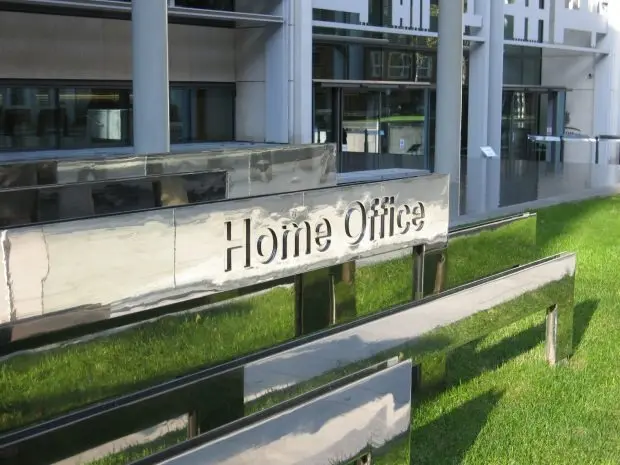
What transpired in court ought to send shockwaves through every person who still believes in democratic norms. According to Declassified UK, lawyers for the Home Office openly admitted that the proscription was “Draconian, and deliberately so.” In other words, the state is not just comfortable with authoritarian repression — it is actively embracing it.
The judge sided with the government, citing national security. Yet, the Home Office presented no urgent evidence to justify this extraordinary action. The prosecution of peaceful protesters for holding placards reading “I oppose genocide. I support Palestine Action” began hours later. Among the arrested: an 83-year-old vicar, a former government lawyer, an emeritus professor, and multiple NHS workers.
This is not a dystopian script. It is Britain, in 2025.
Jones was right to remind us that the repression of protest has a long lineage. From Walter Wolfgang’s 2005 detention under terrorism laws for heckling at the Labour conference, to Boris Johnson’s “noisy protest” bans, the authoritarian foundations were already laid. But something new is happening now: civil disobedience is being equated with terrorism, and moral clarity is being legally redefined as extremism.
The government has been dishonest throughout this process. As Declassified revealed, the decision to proscribe Palestine Action followed a June 20 protest in which activists entered RAF Brize Norton and disabled military aircraft engines using red paint. But the Home Office had already advised Yvette Cooper as early as March that the group met the statutory tests for proscription — long before that protest took place. The Brize Norton action was the pretext, not the cause.
To push the legislation through, the Home Office peddled unsubstantiated claims that the group might be funded by Iran, and deliberately exaggerated the threat they posed to public safety. Worst of all, it lumped Palestine Action into a proscription order alongside the Maniacs Murder Cult and the Russian Imperial Movement — far-right organisations with clear records of extremist violence. This grotesque sleight of hand was used to blur moral and political distinctions — and to make dissent indistinguishable from hate.
Even The Times, no friend of Palestine Action, has condemned the ban as unjustified, calling the group an “antisocial menace” but not a terrorist threat. The fact that this distinction must now be made at all is a measure of how degraded political language has become.
This is not support for a proscribed group. It is support for the right to resist complicity in foreign war crimes, and for the basic civil liberties that once defined this country. Those liberties are being dismantled — not to defend the public, but to shield those in power from accountability for their role in facilitating the destruction of Gaza.
We do not have to agree with every action taken in protest. But we must insist on the moral and legal distinction between sabotage and slaughter, between throwing paint at a weapons facility and dropping bombs on civilians. If our laws no longer make that distinction, then the law is the problem.
A judicial review hearing is scheduled for July 21. In the meantime, the arrests will continue. The fear will spread. And so must the resistance.
The battle is no longer just about foreign policy. It is about whether Britain remains a society in which protest is a right — or becomes one in which silence is survival.
We owe Owen Jones — and all those arrested for speaking the truth — a debt of courage. Let their warning not fall on numb ears. For if democracy dies in fear, it also dies in fatigue.
Legal Disclaimer: This article is intended solely for the purposes of news reporting and public interest journalism. Any references to, or images of, Palestine Action—including logos, clothing, or other identifying articles—are presented strictly in a journalistic context. Their inclusion does not imply support for or affiliation with any proscribed organisation. The publisher remains neutral and does not endorse or promote the views or activities of any group mentioned.